
- Offer Profile
- JAI provides
innovative digital CCD/CMOS camera technology for applications in industrial
machine vision, medical imaging and outdoor imaging applications, as well as
complete solutions for traffic imaging/vehicle recognition in Intelligent
Traffic Systems (ITS)
JAI stands for:
- High product quality, innovative engineering, and proven technology.
- Solid financials and long-term viability.
- Attractive warranties and responsive support
Area scan cameras
-
Single-sensor and multi-sensor progressive area scan cameras
JAI provides a wide selection of industrial machine vision cameras with both single-sensor and multi-sensor configurations. Resolutions range from 0.3 MP to 20 MP, with high frame rates ranging up to 250 fps for full 5MP resolution. A selection of cameras can operate beyond the visible – in the ultraviolet, near infrared and in the short wave infrared light spectrums. 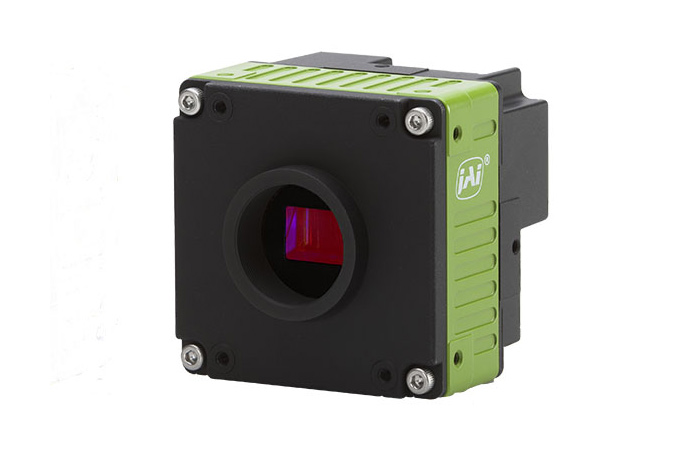
Single-sensor monochrome area scan cameras
-
JAI provides a wide selection of single-sensor color area scan cameras with resolutions ranging from 2.35 to 45 megapixels. Cameras are built around state-of-the-art sensor technology including the latest CMOS global shutter imagers.
For maximum imaging performance JAI’s Spark Series cameras are the ideal choice. These CMOS cameras are designed to provide an optimal blend of speed, resolution, and supreme image quality.
If there is a tough price/performance challenge, the area scan cameras in the Go Series are the way to go. These small size and low weight megapixel CMOS cameras are versatile performers for a wide range of machine vision applications.
All cameras are designed to perform in tough environments to withstand operating conditions with high vibration effects (up to 10G) and high shock occurrence (up to 80G). This classifies them among the best in relation to industrial reliability and durability.
- Spark Series: CMOS area scan cameras with high resolution, high frame rates and supreme image quality.
- Go-X Series: CMOS area scan cameras that are compact, lightweight, and attractively-priced, with extra screening to prevent dust in the optical path.
- Go Series: JAI's original small CMOS area scan cameras with 2.4 or 5.1 megapixel resolutions and three interface options.
Single-sensor color area scan cameras
-
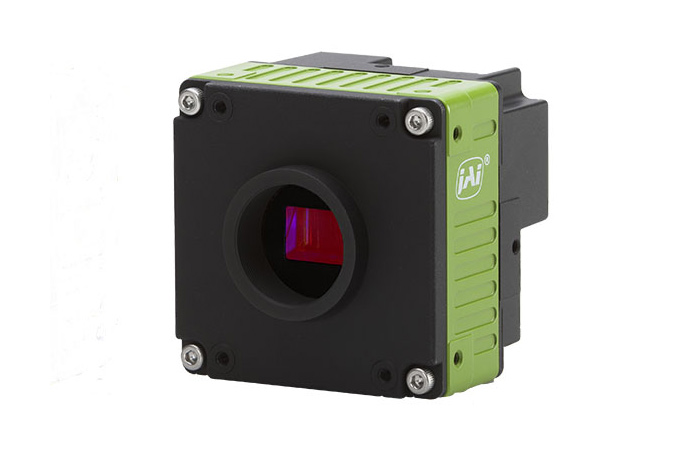
JAI provides a wide selection of single-sensor color area scan cameras with resolutions ranging from 2.35 to 45 megapixels. Cameras are built around state-of-the-art sensor technology including the latest CMOS global shutter imagers.
For maximum imaging performance JAI’s Spark Series cameras are the ideal choice. These CMOS cameras are designed to provide an optimal blend of speed, resolution, and supreme image quality.
If there is a tough price/performance challenge, the area scan cameras in the Go Series are the way to go. These small size and low weight megapixel CMOS cameras are versatile performers for a wide range of machine vision applications.
All cameras are designed to perform in tough environments to withstand operating conditions with high vibration effects (up to 10G) and high shock occurrence (up to 80G). This classifies them among the best in relation to industrial reliability and durability.- Spark Series: CMOS area scan cameras with high resolution, high frame rates and supreme image quality.
- Go-X Series: CMOS area scan cameras that are compact, lightweight, and attractively-priced, with extra screening to prevent dust in the optical path.
- Go Series: JAI's original small CMOS area scan cameras with 2.4 or 5.1 megapixel resolutions and three interface options.
Multi-sensor prism-based multispectral area scan cameras
-
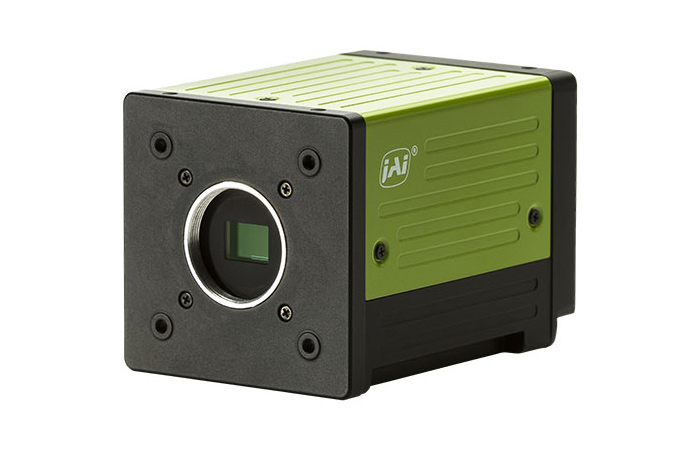
JAI's multi-sensor, multispectral prism cameras provide simultaneous images of multiple wavebands through a single optical path. The cameras split incoming light into two or three separate channels with precise pixel-to-pixel alignment regardless of motion or viewing angle.
You can choose from several standard models with predefined configurations of visible and near-infrared (NIR) wavebands, or you can use JAI's innovative Flex-Eye technology to design your own configuration with two or three custom wavebands perfectly tailored to your application requirements.
Multi-sensor, multispectral cameras are ideal for life sciences or surgical applications using NIR fluorescence; for intelligent farming techniques such as NDVI/NDRE vegetation analysis or autonomous weed removal systems; for fruit, vegetable, and other types of food sorting or inspection; for electronics/PCB inspection; and much more..
- Standard or custom-designed configurations with up to three wavebands and up to 3.2 megapixels per channel.
- Custom waveband specifications as narrow as 25 nm located in the 405-1000 nm range (visible - NIR).
- Simultaneous high-speed capture and output via 10 GigE multi-stream interfaces.
3-sensor R-G-B prism area scan cameras
-
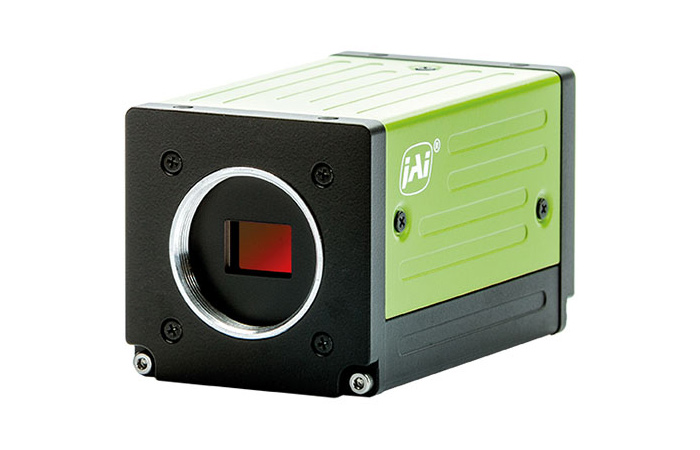
JAI’s prism-based R-G-B cameras separate the incoming light into red, green and blue wavelengths, which are directed to three separate image sensors.
The cameras deliver exceptionally accurate R-G-B raw image data ideal for demanding color machine vision applications across a range of industries including pharmaceutical, electronics, printing/packaging and imaging in microscopy and medical diagnostics equipment.
The 3-sensor imaging technique provides more accurate per-pixel color values than those obtainable with the Bayer Mosaic technique relying on interpolation routines alone to define pixel color values. The cameras also offer more precise spatial resolution, enabling accurate edge detection and the ability to resolve smaller details.The latest CMOS cameras in the Apex Series represent a large step forward in resolution, speed and color pre-processing functions all at a very reasonable price point.
This will enable many more vision designers to step up to the increased value that comes from incorporating a prism-based color camera from JAI.
- The Apex series comprises 12 different cameras (CCD and CMOS) with resolutions from 0.8 to 3.2 megapixels.
- The AP-3200T models features Sony Pregius IMX265 sensors or IMX252 sensors (10GE model).
- The AP-1600T models features Sony Pregius IMX273 sensors.
- The CMOS models feature on-board color space conversion including: RGB to HSI, RGB to CIE XYZ and RGB to sRGB/Adobe RGB.
- Analog gain and exposure time can be set independently for the R-G-B channels allowing for better SNR conditions.
Line scan cameras

-
Single-sensor and multi-sensor line scan cameras. Monochrome and color
JAI’s extensive product offering includes color line scan cameras featuring prism technology with multiple CCD or CMOS linear sensors delivering high performance color/NIR imaging solutions for high-speed web/continuous applications such as print verification, tile inspection, food/fruit sorting, and more. Also monochrome line scan cameras with ultra fast scan rates. 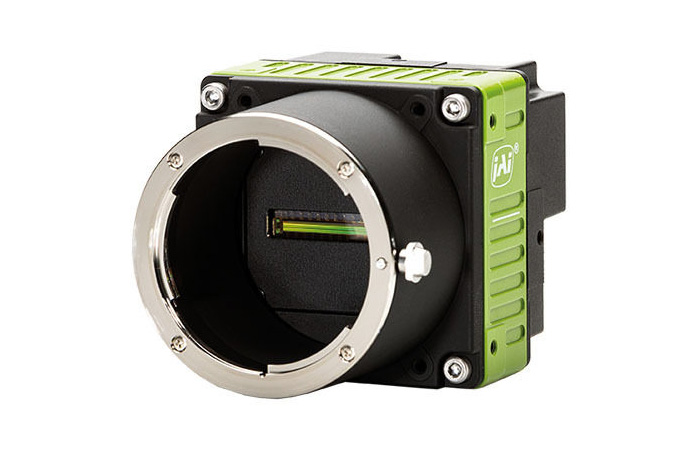
Monochrome line scan cameras with fast scan rates
-
JAI’s monochrome line scan cameras provide an excellent combination of high resolution and fast scan rates.
The Sweep SW-8000M-PMCL model features an 8192-pixel linear CMOS sensor delivering a line rate of 100,000 lines/s (100 kHz) over a Camera Link interface. The SW-4000M-PMCL model is based on a 4096-pixels sensor capable of running as fast as 200,000 lines/s (200 kHz) over Camera Link.
With high shock (80G) and vibration (10G) standards and an ambient operating temperature range of -5 C to +45 C these cameras are built to operate and last in even the most demanding industrial environments - providing users with low-cost-of-ownership.
JAI’s monochrome line scan cameras can be used in many high speed machine vision applications including food sorting, pharmaceutical label inspection, postal sorting, sports, general web inspection and traffic applications such as train, railway, container and vehicle inspection.
All models offer an excellent price/performance ratio, so the budget can be stretched further, getting more cameras for the same investment.- Among the fastest monochrome line scan cameras available on the market for their type and resolution.
- Available with F-mount or M-42 mount, providing a wider range of lens options.
Trilinear color line scan camera
-
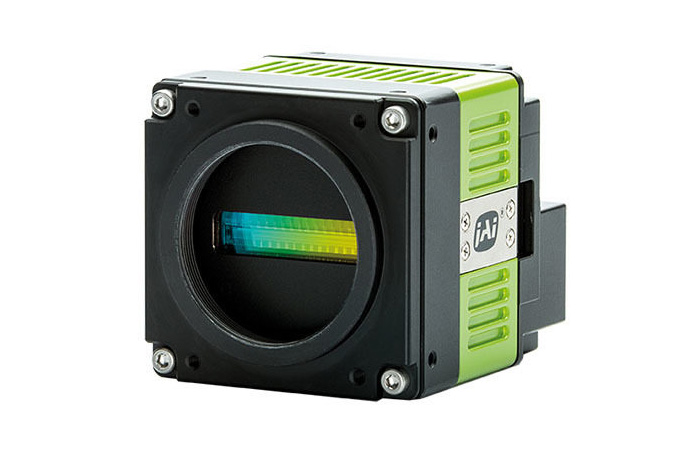
The trilinear camera in JAI’s Sweep Series delivers outstanding color line scan performance for applications that don't require the ultimate color precision provided by the prism technology in JAI's Sweep+ Series.
The model SW-4000TL-PMCL features a maximum line rate of 66 kHz for 24-bit RGB output, making it one of the fastest 3 x 4096 color line scan cameras on the market.
Advanced spatial compensation and tilted view correction functions ensure high image quality, while support for direct connection to rotary encoders simplifies setup and enables automatic detection of scan direction.
The SW-4000TL-PMCL is the only high-speed trilinear camera to offer support for both vertical and horizontal binning, as well as built-in color space conversions to HSI, CIEXYZ, sRGB, Adobe RGB, and custom RGB color gamuts.- A set of built-in color space conversion functions to provide image output in a range of standard formats.
- Applications requiring extra sensitivity and minimum readout noise can benefit from the unique binning capabilities.
- Supports direct connection from encoder to camera to minimize cabling and reduce the occurrence of dropped line data.
3-sensor color line scan cameras
-
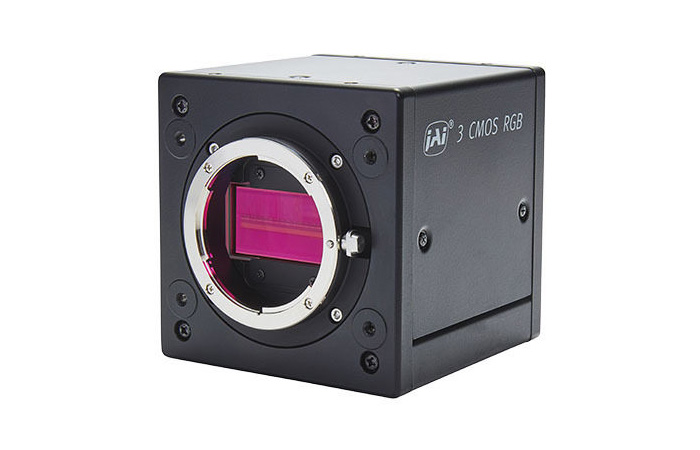
JAI's advanced product offering includes a set of 3-sensor R-G-B color line scan cameras for industrial machine vision applications. Part of the Sweep+ Series, these cameras feature state-of-the-art prism technology providing the best possible performance, precision, and versatility for line scan imaging in continuous production flows.
Typical applications include high-speed web inspection of paper, plastic, film, textiles, tile and lumber, as well as color print inspection and inspection in the food processing industry.
3-CMOS or 3-CCD sensors are precisely-aligned on a beam-splitter prism to a common optical path providing solutions that are easy to set up, with higher color precision and less color degradation over time than trilinear color cameras.
With efficient manufacturing facilities and reliable and durable technology, these R-G-B color line scan cameras are available at good price/performance points offering low cost of ownership and supreme color line scan image quality for the most demanding machine vision applications.- The Sweep+ Series eliminates halo effects and complex alignments associated with inspection of cylindrical/wavy objects.
- A single optical plane simplifies positioning and encoding tasks.
- Better light transmittance reduces illumination requirements.
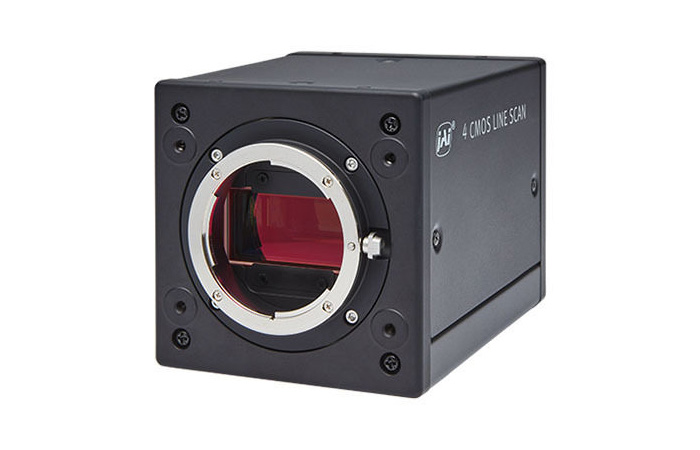
4-sensor color line scan cameras
-
n addition to 3-sensor prism line scan cameras, JAI's Sweep+ Series includes a set of 4-sensor line scan cameras designed to simultaneously capture R-G-B image data in the visible light spectrum and image data in the near infrared (NIR) light spectrum.
These cameras feature state-off-the-art prism technology providing the best possible performance, precision, and versatility for line scan imaging in continuous production flows.
Typical machine vision applications include inspection in the food processing industry, high-speed web inspection of paper, plastic, film, textiles, tile and lumber, as well as print inspection.
The 4-CMOS sensors are precisely-aligned on a beam-splitter prism to a common optical path providing solutions that are easy to set up and offer high color precision.
With efficient manufacturing facilities and reliable and durable technology, these R-G-B-NIR color line scan cameras are available at good price/performance points offering low cost of ownership and supreme color/NIR image quality for the most demanding machine vision applications.- Four prism-mounted image sensors provide simultaneous separate imaging of red, green, and blue, plus near-infrared (NIR) light data.
- The combined RGB/NIR camera technology makes it possible to identify an even wider set of defects on inspected objects.
- The Sweep+ Series eliminates halo effects and complex alignments associated with inspection of cylindrical/wavy objects.
- A single optical plane simplifies positioning and encoding tasks.
- Better light transmittance reduces illumination requirements.
Wave Series: 2-sensor SWIR line scan camera
-
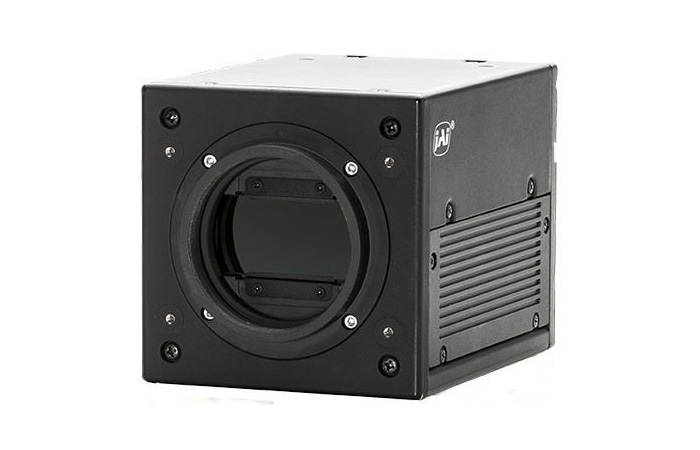
The Wave Series camera is a 2-sensor prism line scan camera capable of sensing Short Wave InfraRed (SWIR) light.
The camera is based on Indium/Gallium /Arsenide (InGaAs) sensor technology and combined with JAI’s prism line scan technology, making it capable of delivering dual-band imaging in the SWIR light spectrum (900 – 1700 nm).
Multi-sensor camera technology is a JAI core competence and over the years JAI has delivered cameras covering RGB and NIR into various applications.
The Wave Series camera brings 2-sensor imaging to the SWIR light spectrum providing extra “hidden” imaging data. This capability enhances current machine vision systems with imaging beyond what is possible when imaging the visible and/or the near infrared light spectrum.
The Wave Series opens up a range of new applications in automated visual inspection.- Simultaneous dual-band imaging in the Short Wave InfraRed (SWIR) light spectrum.
- Wavelength band: 900 nm to 1700 nm.
- Active pixels: 2 x 1024 pixels.
- Line rate: 39 kHz (39,230 line/second).
- Cell size: 25.0 μm x 25.0 μm.
Product Lines
-
A JAI camera for every vision need
JAI’s camera series suit almost every imaging need in industrial, medical and outdoor imaging, including traffic and sports. Choose from a wide range of single-sensor cameras starting at very attractive price levels or - if the application needs the very best in color fidelity – JAI offers a broad selection of multi-sensor area scan and line scan cameras. 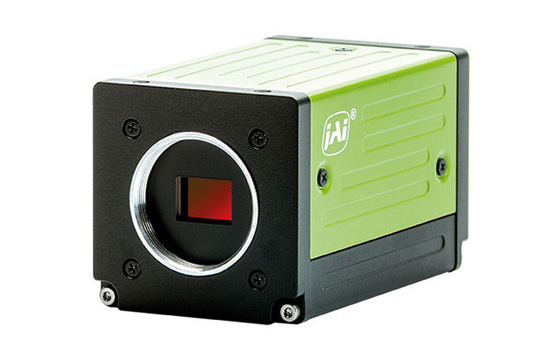
Apex Series
-
3-CMOS prism-based RGB area scan cameras providing better color fidelity than traditional Bayer cameras
The Apex Series cameras are 3-sensor R-G-B prism cameras that separate the incoming light into red, green and blue wavelengths, which are directed to three separate image sensors.
The cameras deliver exceptionally accurate R-G-B raw image data ideal for demanding color machine vision applications across a range of industries including pharmaceutical, electronics, printing/packaging and imaging in microscopy and medical diagnostics equipment.
The 3-sensor imaging technique provides more accurate per-pixel color values than those obtainable with the Bayer Mosaic technique relying on interpolation routines alone to define pixel color values. The cameras also offer more precise spatial resolution, enabling accurate edge detection and the ability to resolve smaller details.
The latest CMOS cameras in the Apex Series represent a large step forward in resolution, speed and color pre-processing functions all at a very reasonable price point. This will enable many more vision designers to step up to the increased value that comes from incorporating a prism-based color camera from JAI.- The Apex series comprises 12 different cameras (CCD and CMOS) with resolutions from 0.8 to 3.2 megapixels.
- The latest AP-3200T models features Sony Pregius IMX265 sensors.
- The AP-1600T models features Sony Pregius IMX273.
- The CMOS models feature on-board color space conversion including: RGB to HSI, RGB to CIE XYZ and RGB to sRGB/Adobe RGB.
- Analog gain and exposure time can be set independently for the R-G-B channels allowing for better SNR conditions.
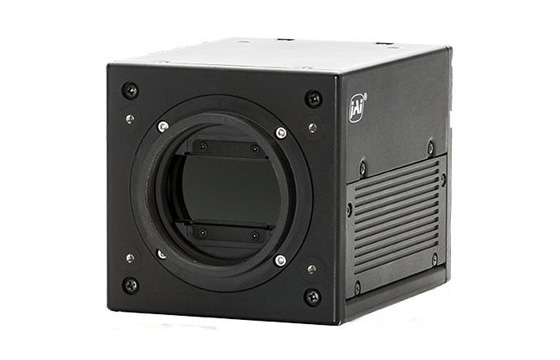
Wave Series
-
Prism-based dual-sensor InGaAs line scan cameras for Short Wave InfraRed (SWIR) imaging
The Wave Series camera is a 2-sensor prism line scan camera capable of sensing Short Wave InfraRed (SWIR) light.
The camera is based on Indium/Gallium /Arsenide (InGaAs) sensor technology and combined with JAI’s prism line scan technology, making it capable of delivering dual-band imaging in the SWIR light spectrum (900 – 1700 nm).
Multi-sensor camera technology is a JAI core competence and over the years JAI has delivered cameras covering RGB and NIR into various applications.
The Wave Series camera brings 2-sensor imaging to the SWIR light spectrum providing extra “hidden” imaging data. This capability enhances current machine vision systems with imaging beyond what is possible when imaging the visible and/or the near infrared light spectrum.
The Wave Series opens up a range of new applications in automated visual inspection.- Simultaneous dual-band imaging in the Short Wave InfraRed (SWIR) light spectrum.
- Wavelength band: 900 nm to 1700 nm.
- Active pixels: 2 x 1024 pixels.
- Line rate: 39 kHz (39,230 line/second).
- Cell size: 25.0 μm x 25.0 μm.
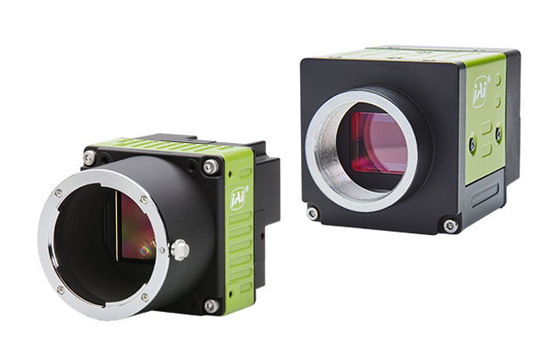
Spark Series
-
High resolution area scan cameras
Spark Series area scan cameras are the perfect choice for machine vision applications demanding high quality images with the highest possible throughput. They feature the latest CMOS imagers delivering high resolution images at speeds as much as 10 times faster than traditional CCD cameras.
For example, 20-megapixel (MP) models can deliver up to 30 fps output while some 5-MP models run at 250 fps or more. Using the region-of-interest (ROI) feature, even higher frame rates can be achieved.
Spark Series cameras feature advanced functions like in-camera pattern correction, multi-ROI, true correlated double sampling (selected models), combined analog and digital gain control (selected models), and efficient global shutters to ensure low noise and high quality images with high pixel uniformity.
The combination of the above features with high sensitivity, industrial grade construction, and an attractive price point, makes the Spark Series cameras ideal solutions for high performance machine vision systems and outdoor applications in sports, traffic and surveillance.- High throughput with outstanding megapixels-per-second performance.
- High quality images with low noise, high pixel uniformity and no rolling shutter distortion.
- Large, low-noise pixels provide outstanding low light performance.
- High dynamic range modes (selected models) capture both bright and dark details under high contrast conditions.
- Highly resistant to vibration and shock in industrial environments (high reliability, low-cost-of-ownership).
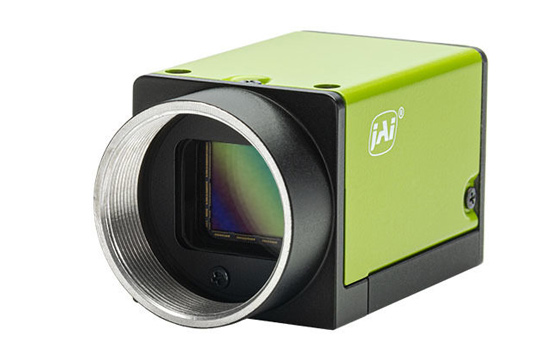
Go-X Series
-
Compact, attractively-priced area scan cameras with industrial grade reliability
The Go-X Series offers compact, attractively-priced industrial area scan cameras with a blend of features, image quality and industrial grade reliability that is in high demand for the next generation of machine vision systems.
The Go-X Series incorporates the most popular Sony Pregius CMOS sensors with resolutions ranging from 2.3 to 12.4 megapixels and a choice of USB3 Vision or GigE Vision interfaces.
With industrial grade shock and vibration ratings (80G/10G) and excellent thermal dissipation, they are designed to keep critical inspection systems running 24/7/365.
Backed by a six-year warranty – the longest in the industry - they are built using JAI's proven manufacturing process that has delivered field failure rates of less than two cameras per thousand over the last five years.
All cameras include a robust set of capabilities like region-of-interest (ROI), image flipping and mirroring, 8/10/12-bit output, blemish compensation and shading correction – plus, advanced features like two different sequencer modes and an intelligent, user-customizable auto-exposure function (ALC).
- Resolutions from 2.3 to 12.4 megapixels (Bayer color and monochrome models).
- Equipped with Sony Pregius CMOS sensors.
- Industrial grade shock and vibration ratings (80G/10G), plus excellent thermal dissipation.
- Prices starting at €289 with a 6-year warranty.
- Extensive dust prevention measures include cleanroom assembly, and a sealed sensor compartment for dust-free optical path on all models.
- Three sets of mounting holes with 20, 21, and 12 mm spacing fit most existing designs with no re-tooling.
- A free SDK plus high-level API lets you easily design for Windows, Linux, or ARM embedded platforms.
- A compact camera size (29 x 29 x 52 mm) helps to minimize the overall size of the vision system.
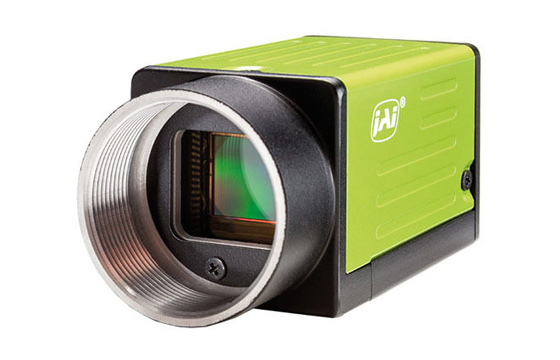
Go Series
-
Small and versatile area scan cameras
JAI’s Go Series delivers an exceptional blend of small size, high versatility, and excellent performance, all at an entry-level price, making the cameras a perfect starting point for a wide range of machine vision applications.
CMOS technology, low-noise pixels, global shutters, sequencer functions, and other advanced features help ensure image quality and operational flexibility beyond entry-level expectations.Polarized models (GO-5100MP-USB and GO-5100MP-PGE with IMX250MZR sensor) are also available.
All Go Series cameras measure 29 x 29 x 41.5 mm (excluding lens mount) and weigh less than 50 grams, enabling them to fit into small spaces or into vehicles or other applications where weight and size is critical.
They are ruggedly built for the real world, with robust housings and extensive shock (80G) and vibration (10G) testing to maximize their ability to withstand harsh industrial environments. The Go Series carry an MTBF-rating exceeding 180,000 hours - a guarantee for reliable operation and low-cost-of-ownership throughout the cameras’ lifetime.- High performance CMOS sensor technology lets Go Series cameras maintain high frame rates despite their small size.
- The Go Series features global shutters, analog gain control, and other features to maximize image quality.
- Available with the latest CMOS sensors including IMX250, IMX264, IMX174, IMX249 and IMX250MZR.
- Industrial-grade design and built for harsh industrial environments (full 3-year warranties standard).
- Go Series cameras are available with a choice of digital interfaces to fit all needs.
- Also polarized models available (GO-5100MP-USB and GO-5100MP-PGE with IMX250MZR sensor).
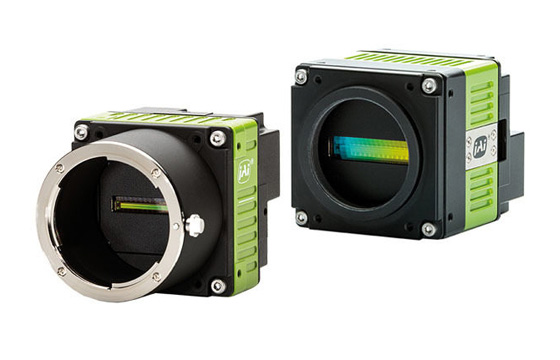
Sweep Series: Monochrome and trilinear line scan cameras
-
Monochrome and trilinear line scan cameras with fast scan rates and high image quality
JAI’s Sweep Series includes both monochrome and trilinear color line scan cameras with line rates that are among the fastest available for their type and resolution.
The Sweep SW-4000TL-PMCL trilinear model delivers outstanding color line scan images for applications that don’t require the ultimate image precision provided by the Sweep+ Series.
The SW-4000TL model features a maximum line rate of 66 kHz, making it one of the fastest 3 x 4096 color line scan cameras on the market.
Among the features are vertical and horizontal binning and built-in color space conversion not available on similar trilinear cameras.
The Sweep SW-4000M-PMCL and Sweep SW-8000M-PMCL are two fast monochrome line scan cameras. The SW-4000M-PMCL has 4096 pixels per line and runs up to 200 kHz (200,000 lines/s), while the SW-8000M-PMCL offers 8192 pixels per line at a maximum line rate of 100 kHz (100,000 lines/s).- A set of built-in color space conversion functions to provide image output in a range of standard formats (SW-4000TL model).
- Applications requiring extra sensitivity and minimum readout noise can benefit from the unique binning capabilities (SW-4000TL model).
- Supports direct connection from encoder to camera to minimize cabling and reduce the occurrence of dropped line data (SW-4000TL model).
- The SW-8000M-PMCL monochrome model features 1 x 8192 pixels delivering a line rate of 100,000 lines/s (100 kHz).
- The SW-4000M-PMCL monochrome model features 1 x 4096 pixels and runs fast as 200,000 lines/s (200 kHz).
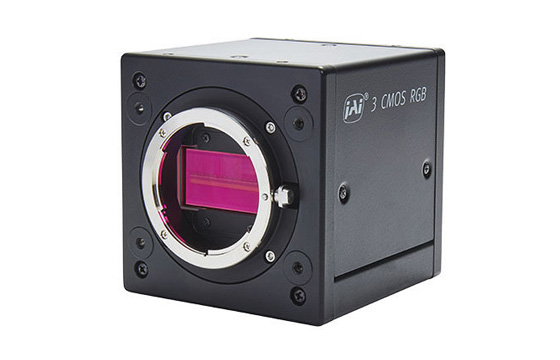
Sweep+ Series: 3 and 4-sensor color line scan cameras
-
Multi-sensor prism-based color/NIR line scan cameras combining precision, sensitivity and multi-spectral options
The Sweep+ Series comprises 3-sensor R-G-B and 4-sensor R-G-B-NIR line scan cameras for industrial machine vision applications.
They features state-off-the-art prism technology providing the best possible performance, precision, and versatility for line scan imaging in continuous production flows.Typical applications include high-speed web inspection of paper, plastic, film, textiles, tile and lumber, as well as color print inspection and inspection in the food processing industry. The CMOS sensors are precisely-aligned on a beam-splitter prism to a common optical path providing higher color precision and solutions that are easy to set up.
Sweep+ Series cameras equipped with four CMOS sensors are designed to simultaneously capture R-G-B color image data in the visible light spectrum and image data in the near infrared (NIR) light spectrum.
With efficient manufacturing facilities and reliable and durable technology, these color line scan cameras are available at good price/performance points offering low cost of ownership and supreme color line scan image quality for the most demanding machine vision applications.- The Sweep+ Series eliminates halo effects and complex alignments associated with inspection of cylindrical/wavy objects.
- 4-CMOS technology provides simultaneous imaging of R-G-B visible light and near infrared (NIR) light.
- A single optical plane simplifies camera positioning and encoding tasks.
- Better light transmittance reduces illumination requirements.
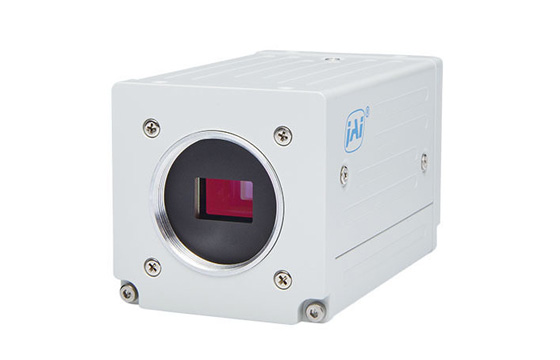
Apex Medical & Life Sciences Solutions
-
Low noise, high sensitivity prism cameras fine-tuned for advanced color microscopy applications
Apex Medical & Life Sciences Solutions is a suite of 3-CMOS area scan cameras offering advanced color imaging capabilities for a wide range of applications in the medical and life sciences markets. The multi-sensor prism technology provides better color fidelity and spatial precision than traditional Bayer color cameras, while the USB3 Vision interface offers excellent plug-and-play compatibility.
All Apex Medical models are fully integrated with two of the most popular microscopy software solutions – Image-Pro® from Media Cybernetics and the µManager open source software package.
This suite of cameras includes both standard Apex Series cameras and also special "LSX" models offering strict screening and preventive measures to minimize the occurrence of any dust, lint, or other foreign object debris (FODs) on the prism, sensor, or in the optical path of the camera. Suitable for either life sciences or industrial applications, these "LSX" models feature white housings that are ideal for systems intended for hospitals, or clinical/laboratory environments where white housings are often preferred.
In addition, special “NF” models are offered with standard IR-cut filters removed in order to better support life sciences applications where enhanced deep-red sensitivity is required, as well as certain industrial microscopy applications where both visible and NIR analyses are performed simultaneously. These capabilities are further bolstered by the built-in color enhancement function included as a standard feature in the Apex Series cameras.- The most advanced color imaging technology available for medical and life sciences applications.
- Includes pre-screened models offering the highest levels of dust suppression in the industry.
- Sony Pregius IMX265 (AP-3200T models) and Sony Pregius IMX273 sensors (AP-1600T models).
- Up to 38 frames/s for 3.2 MP models and up to 79 frames/s for 1.6 MP models. Ideal for time-lapse imaging, EDOF, or high-throughput industrial inspections.
- Features full integration with Image-Pro image (Media Cybernetics) and µManager for easy development of microscopy applications.
- On-board color space conversion including: RGB to HSI, RGB to CIE XYZ and RGB to sRGB/Adobe RGB.
- Analog gain and exposure time can be set independently for the R-G-B channels allowing for better SNR conditions.
- Standard USB3 Vision interface.
- Includes models with and without IR-cut filters.
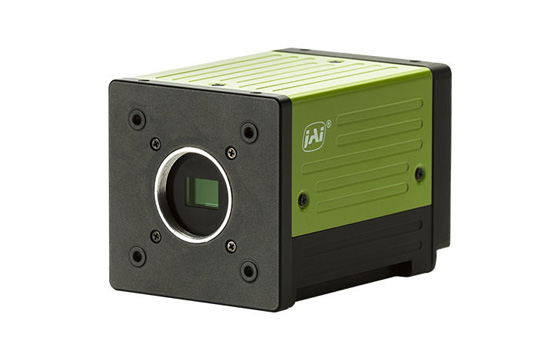
Fusion Series
-
Multi-sensor area scan cameras with unique capabilities for multi-spectral imaging applications
JAI’s multi-spectral prism cameras perform both visible and near-infrared (NIR) inspection simultaneously, by splitting incoming light to two separate sensors - a visible color channel from 400-700nm and an NIR channel from 750-900+nm.
This makes it possible to use a single camera to simultaneously inspect both visible elements and sub-surface defects or other information that is optimally detected at NIR wavelengths.
The multi-spectral cameras are ideal for inspecting currency, textiles, circuit boards, and organic items such as fruit and vegetables.- Two-in-one camera: Multi-spectral cameras allows users to replace multiple inspection cameras with a single set up.
- Ease-of-use: JAI multi-spectral cameras offer ease-of use and lower equipment and maintenance costs.
- The 2-sensor HDR cameras enable the capture of full linear high dynamic range image data.
Knowledge

- Get more knowledge about JAI's machine vision cameras and the technologies behind.
Free white papers

How SWIR imaging enhances food and beverage quality control
-
Discover the value of SWIR technology in the food and beverage industry and how it can help you improve your quality control processes to meet the highest standards of efficiency, quality and consumer safety.
Download the white paper and learn about:
- The fundamentals of SWIR imaging technology and the role it plays in the food and beverage industry.
- The advantages of employing SWIR cameras for granular and packaging inspections, including some application examples.
- The benefits of using a single camera that offers both simultaneous and separate imaging of RGB plus SWIR light.
How to select between multi-sensor prism-based and single-sensor multiline line scan cameras in different types of machine vision tasks.
-
The selection of camera technology is determined largely by the requirements of a machine vision application. Line scan cameras have traditionally been chosen for applications requiring high speed.
In this whitepaper, we explain how to select the right line scan camera technology for your high-speed, industrial production applications, requiring color or multi-spectral imaging. We do this through a comparison of single sensor multi-line cameras to multi-sensor prism-based line scan cameras.
Download the white paper and discover:
- The overall landscape of line scan applications and the latest technological approaches used by single-sensor multi-line cameras and line scan cameras
- What types of applications are most challenging to single-sensor multi-line cameras when it comes to maintaining required image quality
- How prism-based multi-sensor technology can be applied to address specific issues common to high-speed line scan applications
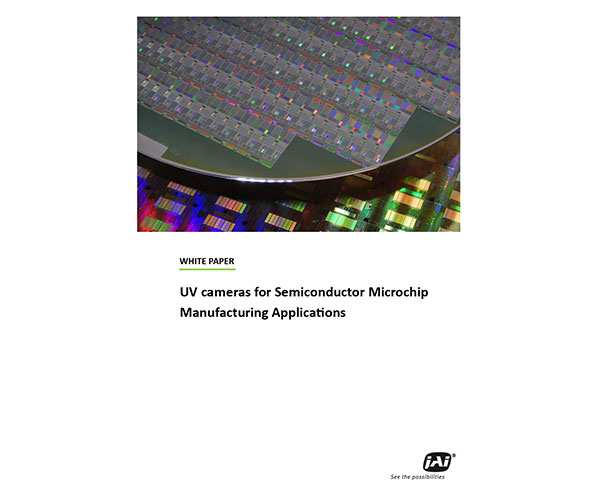
UV cameras for semiconductor microchip manufacturing applications
-
The semiconductor industry sets the highest standards for quality and reliability, as even the slightest deviation or defect in the manufacturing process can have significant consequences. Our white paper delves into the increasingly important role that ultraviolet (UV) cameras play in the inspection process, highlighting their ability to identify the most subtle surface imperfections and irregularities.
Download the white paper and learn about:
- The role of UV light in the electromagnetic spectrum.
- How the semiconductor industry leverages UV camera technology for various inspection applications.
- Key factors to consider when selecting a UV camera for these applications.
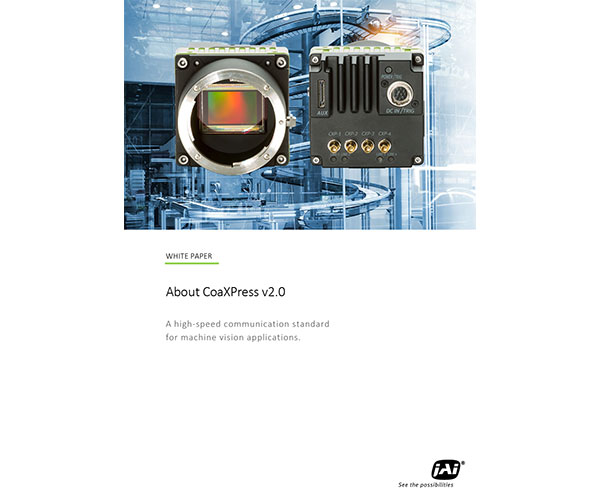
CoaXPress v.2.0 - A high-speed communication standard for machine vision applications.
-
To meet the rising demands for improved manufacturing efficiency and production quality, many industrial machine vision inspection applications in factory automation are pushing for even higher image resolutions, faster frame rates, and additional optical inspection stations along the manufacturing line. CoaXPress v2.0 rises to this challenge with its high-throughput capabilities, multi-lane architecture, and predictable data transmission—making it a powerful interface solution for next-generation vision systems.
Download our white paper to dive into key insights on:
- How CoaXPress can provide predictability, stability and integrity of data transmission in a multi-camera and multi-processing industrial machine vision environment.
- Various CoaXPress features, including precision timing, synchronization, jitter control, Cyclic Redundancy Check (CRC), triggering mechanisms, and power-over-cable functionality.
- Performance benchmarks for various CXP configurations and cable lengths—compared against other popular machine vision interfaces.
- How CoaXPress can provide predictability, stability and integrity of data transmission in a multi-camera and multi-processing industrial machine vision environment.
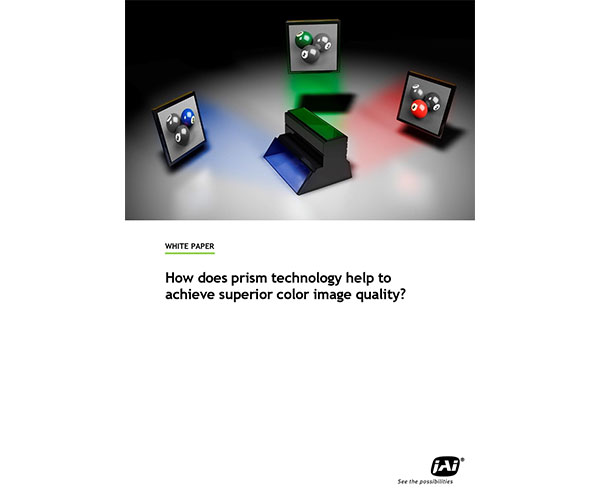
Achieve superior color image quality
-
Real and full-color depth, improved color contrast, and better color differentiation. These vital image quality factors can be achieved using the unique advantages of prism technology.
In this whitepaper we focus on multi-sensor prism-based camera technology, its technological advantages, and showcase the future of color imaging in machine vision to help you achieve superior image quality.
Download the whitepaper and discover:
- The basics of prism technology for multi-sensor area scan cameras
- The technological advantages of prism-based cameras over single sensor RGB Bayer cameras for machine vision applications
- The parameters responsible for achieving superior image quality
10 GigE Technology Guide
-
Get answers to key questions about 10-Gigabit Ethernet and its ability to support high performance vision systems.
Download the white paper and learn about:- Support for networks with mixtures of Ethernet speeds and components (10 GigE, NBASE-T, 1000BASE-T).
- Cabling standards and supported pixel formats.
- CPU loads, latency, and network synchronization.
- Fiber-optic options for longer cable runs and better electrostatic noise immunity (SFP+).
Tech Guides
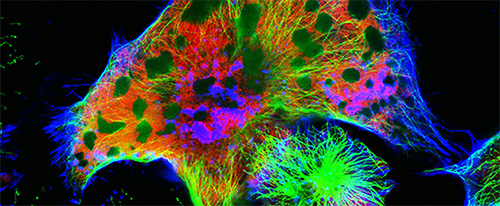
Tech Guide: Color Imaging
-
Color imaging in machine vision: how to choose the right camera for your application.
For many years, most machine vision systems only operated in black-and-white. Even today, the majority of machine vision applications are still monochrome. Yet there are a growing number of applications where color imaging is both required andcan provide significant advantages.
The use of color in machine vision applications has increased significantly in the past ten years. This has been accompanied by steady improvements in both the camera technology and the algorithms to support color machine vision applications. As a result, many more machine vision system designers are finding themselves facing new challenges as they embark on building systems where color is a critical factor.
Read on to learn more about the unique characteristics of color imaging in machine vision and find out which color imaging machine vision technologies best suit your application requirements.
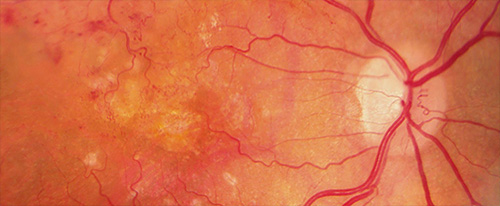
Tech Guide: Color imaging in microscopy
-
Advanced color microscopy solutions for life sciences and industrial applications.
It is often said that the world gets smaller every day. For designers of vision systems, that phrase takes on a special meaning as increasing numbers of today’s vision systems must concern themselves with microscopic details. Tasks which once might have been performed manually by a single individual with an optical microscope, are now being performed faster and with higher accuracy and repeatability than ever before by combining microscopy with digital cameras and sophisticated image capture and analysis software.
These microscope-based machine vision systems can be found in a wide range of life sciences applications, as well as in industrial applications ranging from semiconductor inspection to materials science to failure analysis and QA.
For many of these digital microscopy systems, the capture and analysis of color information is critical to meeting the application’s goals. Thus, the system’s camera or cameras, which serve as the “eyes” of the system, must be able to provide the right levels of both spatial and color information to enable the software “brain” of the system to perform its function.
Read on to learn more about digital microscopy solutions and how various camera capabilities can be utilized to meet your application requirements.
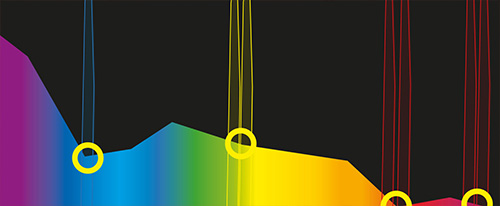
Tech Guide: Multispectral Imaging
-
Multispectral imaging for medical and industrial machine vision systems
Just as machine vision systems have evolved from traditional monochrome cameras to many systems that now utilize full color imaging information, there has also been an evolution from systems that only captured broadband images in the visible spectrum, to those that can utilize targeted spectral bands in both visible and non-visible spectral regions to perform more sophisticated inspection and analysis.
The color output of the cameras used in the machine vision industry today is largely based on Bayer-pattern or trilinear sensor technology. But imaging is moving well beyond conventional color where standard RGB is not enough to carry out inspection tasks. Some applications demand unconventional RGB wavelength bands while others demand a combination of visible and non-visible wavelengths. Others require exclusively non-visible wavelengths such as UV, NIR or SWIR, with no wavebands in the visible spectrum.
Complex metrology and imaging applications are beginning to demand higher numbers of spectral channels or possibilities to select application-specific spectral filtering at high inspection throughputs. With the traditional machine vision industry merging with intricate measurement technologies, consistent, reliable, high-fidelity color and multispectral imaging are playing key roles in industrial quality control.
Multispectral cameras capture image data at specific frequencies across the electromagnetic spectrum. The wavelengths may be separated by filters or using instruments which are sensitive to specific wavelengths, including light from frequencies beyond our visible sight, such as infrared. Spectral imaging also allows for extraction of additional information which the human eye fails to capture.
Read on to learn more about multispectral imaging solutions and how various camera capabilities can be utilized to meet your application requirements.